
市場因地緣政治緩解和油價下跌而飆升,但消費者信心急劇下滑揭示了經濟脆弱性
Joe 盧, CFA 2025年6月24日 美東時間
重點摘要
- 股市因中東停火協議導致油價暴跌而反彈,但漲幅受到美國消費者信心急劇下滑的抑制,營造出矛盾的經濟景象。
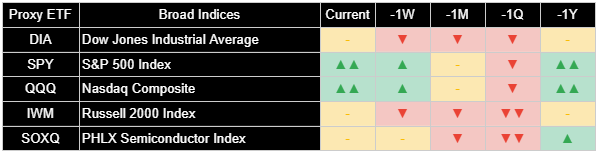
- 美國主要指數因地緣政治利多的消息而上漲,但小型股持續停滯,突顯了此波漲勢由大型股驅動的狹隘性質。
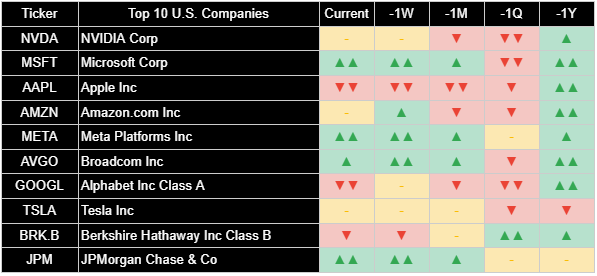
- 大型股表現高度分歧,以AI為中心的博通(Broadcom)和微軟(Microsoft)等個股展現強勢,而蘋果(Apple)和Alphabet等前期領導者則仍處於明顯的下跌趨勢。
- 關鍵經濟數據呈現好壞參半的景象,消費者信心轉弱與房價通膨降溫的正面發展形成衝突。
- 風險偏好轉動在類股表現中顯而易見,金融和工業等週期性類股表現突出,而能源類股則因原油價格下跌而暴跌。
- 國際市場普遍受惠於地緣政治氣氛改善和美元走弱,加拿大和歐洲等地區的正向趨勢增強。
- 停火協議引發了資產間典型的風險偏好反應,原油和黃金下跌,而比特幣和美國公債則因通膨和經濟成長預期的轉變而上漲。
市場概覽
週二,全球市場在以色列與伊朗達成停火協議後全面反彈,地緣政治緊張迅速降溫,並導致原油價格暴跌。能源成本下降為股市帶來強勁支撐,科技與金融股領漲,帶動市場普遍上揚。油價急挫蓋過其他憂慮,並將能源類股推入急遽跌勢。
儘管市場基調樂觀,但美國國內經濟數據揭示了更為複雜的潛在趨勢。6月份消費者信心急劇惡化,遠低於預期,反應家庭對未來商業狀況的悲觀看法正在加劇。不過,房價漲勢明顯降溫,部分抵消前述負面訊號,有助於緩解通膨。地緣政治緩解與美國消費者疲弱的動態,為美國聯準會營造了複雜的舞台,引發市場猜測經濟成長轉弱可能迫使聯準會比預期更早降息。
整體市場指數
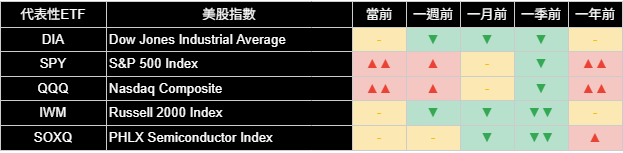
停火協議帶動了風險偏好反彈,推升主要指數,費城半導體指數(+3.76%)和那斯達克綜合指數(+1.53%)領漲。儘管標普500指數和那斯達克指數維持強勁的正向趨勢,但關鍵的啟示是羅素2000指數持續表現不佳,其趨勢再次轉為負面。這突顯了投資者持續偏好大型成長股而非小型股,對此波漲勢的廣度提出質疑。
美國十大企業
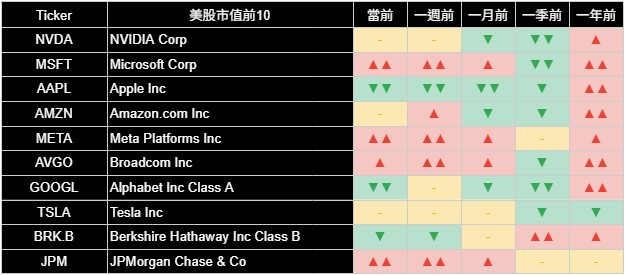
大型股表現高度分歧。以AI為中心的博通(Broadcom Inc.)(+3.94%)等個股上漲,趨勢有所改善。同時,微軟(Microsoft)和Meta的領導地位仍然非常強勁。這些個股的強勢與蘋果(Apple)和Alphabet持續的負面趨勢形成鮮明對比,對於後者的評估在過去一週急劇惡化。此種分歧突顯出市場狹隘地專注於特定的AI題材,而將昔日的領導者拋諸腦後。
美國總體經濟
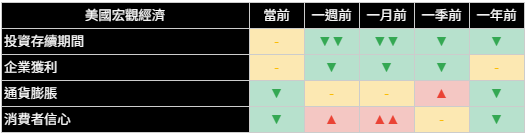
經濟前景因矛盾的訊號而蒙上陰影。消費者信心大幅惡化,疲弱的消費者信心報告恰好證實了這點,並對未來的支出構成威脅。此一看跌訊號被正在降溫的房價所抵銷,這有助於緩解通膨。對投資者而言,關鍵問題是,消費者需求轉弱的力道是否會大於房價帶來的反通膨順風,這為美國聯準會製造了複雜的挑戰。
產業類股總覽
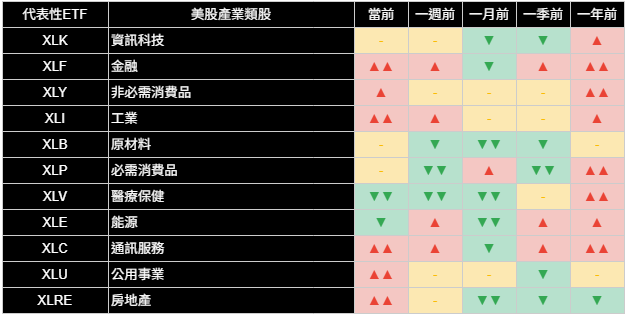
市場中的風險偏好轉動表現明確,金融(+1.50%)和工業(+0.83%)等週期性類股的正向趨勢增強。相較之下,能源類股(-1.30%)則因停火協議重創油價而暴跌,其趨勢在過去一週轉為負面。這場急劇的類股分歧突顯出市場對地緣政治消息的敏感度。這也引發了一個關鍵問題:消費者信心持續走弱,拖累整體經濟動能,目前這波週期性類股的強勢是否具備延續性,仍有待觀察。
國際市場
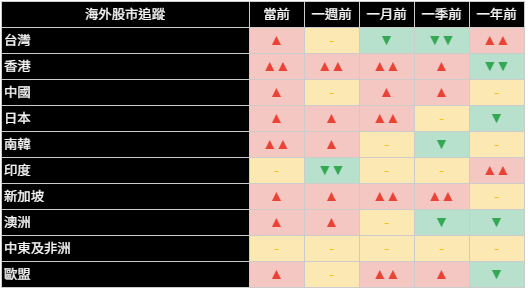
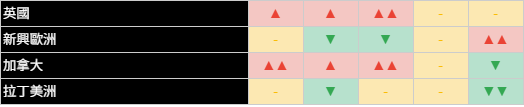
美元走弱和地緣政治緊張局勢緩解提振了國際市場。加拿大的正向趨勢增強,歐盟亦出現正向趨勢,而香港則維持其領導地位。這波重新增強的全球力道顯示投資者正在美國以外尋找機會。然而,隨著日本動能停滯,此波漲勢看來並不平均,其持久性取決於區域基本面能否承受美國消費者放緩的跡象。
其他資產
停火協議引發了資產間典型的風險偏好反應。原油(-4.46%)因供應擔憂煙消雲散而暴跌,而黃金(-1.57%)則因避險需求減弱而下跌。相反地,比特幣(+2.37%)則反彈。7-10年期美國公債(+0.35%)的價格亦因較低的通膨預期和疲軟的消費者數據而上漲。這波跨資產的走勢指向市場正預期通膨降低及潛在的成長放緩,此一論述對近期股市反彈的基礎構成挑戰。
保持聯繫並分享見解:
若您覺得本文有幫助,請點讚支持。
歡迎將此電子報轉發給可能覺得有價值的同事和朋友。
訂閱即可直接在您的收件匣中收到此分析。
在社群媒體上關注我們以獲取更多更新。
本電子報僅供參考,不構成任何證券或資產類別的投資建議或買賣推薦。文中所表達的觀點為作者截至發布日期的觀點,如有變動,恕不另行通知。所呈現的資訊乃基於從相信可靠的來源所獲取的數據,但其準確性、完整性和及時性不作保證。過往表現並非未來結果的指標。投資涉及風險,包括可能損失本金。讀者在做出任何投資決策前,應諮詢其財務顧問。作者及相關實體可能持有本文所討論的資產或資產類別的部位。
立即加入《Joe’s 華爾街脈動》LINE@官方帳號,獲得最新專欄資訊(點此加入)
關於《Joe’s 華爾街脈動》
鉅亨網特別邀請到擁有逾 22 年美國投資圈資歷、CFA 認證的機構操盤人 Joseph Lu 擔任專欄主筆。
Joe 為台裔美國人,曾管理超過百億美元規模的基金資產,並為總資產高達數千億美元的多家頂級金融機構提供資產配置優化建議。
Joe 目前帶領著由美國頂尖大學教授與博士組成的精英團隊,透過獨家開發的 "趨勢脈動 TrendFolios® 指標",為台灣投資人深度解析全球市場脈動,提供美股市場第一手專業觀點,協助投資人掌握先機。
Ceasefire Rally Clashes with Consumer Fears
Markets surge on geopolitical relief and falling oil prices, but a sharp drop in consumer confidence reveals underlying economic fragility.
By Joe 盧, CFA As of June 24, 2025
EXECUTIVE SUMMARY
- Equity markets rallied on a Middle East ceasefire agreement that sent oil prices tumbling, but the gains were tempered by a sharp drop in U.S. consumer confidence, creating a conflicting economic picture.
- Major U.S. indices advanced on the positive geopolitical news, but a persistent lag in small-cap stocks highlights the rally's narrow, large-cap-driven nature.
- Mega-cap performance was highly selective, with AI-centric names like Broadcom and Microsoft showing strength while former leaders like Apple and Alphabet remained in a distinct downtrend.
- Key economic readings painted a mixed picture, as weakening consumer sentiment now clashes with the positive development of cooling housing inflation.
- The risk-on rotation was evident in sector performance, with cyclicals like Financials and Industrials outperforming while the Energy sector plunged on lower crude prices.
- International markets broadly benefited from the improved geopolitical climate and a weaker U.S. dollar, with positive trends strengthening in regions like Canada and Europe.
- The ceasefire triggered a classic risk-on reaction across assets, with crude oil and gold falling while Bitcoin and Treasury bonds rallied on shifting inflation and growth expectations.
MARKET OVERVIEW
Global markets rallied on Tuesday following a ceasefire agreement between Israel and Iran, a development that significantly eased geopolitical tensions and sent crude oil prices tumbling. The relief from lower energy costs provided a powerful tailwind for equities, with technology and financial stocks leading broad-based gains. The sharp decline in oil prices overshadowed other concerns and pushed the energy sector into a steep decline.
Despite the positive market tone, domestic economic data revealed a more complex undercurrent. Consumer confidence deteriorated sharply in June, falling well short of expectations as households expressed growing pessimism about future business conditions. This bearish signal was counterbalanced by data showing cooling home prices, which helps moderate inflation. This dynamic of geopolitical relief versus domestic consumer weakness sets a complex stage for the Federal Reserve, fueling speculation that weakening growth may force a rate cut sooner than anticipated.
BROAD INDICES
The ceasefire fueled a risk-on rally, lifting major indices, with the PHLX Semiconductor Index (+3.76%) and Nasdaq Composite (+1.53%) leading gains. While the S&P 500 and Nasdaq maintain strong positive trends, the key takeaway is the continued underperformance of the Russell 2000, whose trend turned negative again. This highlights persistent investor preference for large-cap growth over small-caps, calling the rally's breadth into question.
TOP 10 U.S. COMPANIES
Mega-cap performance was highly selective. AI-centric names like Broadcom Inc. (+3.94%) gained as its trend improved, while leadership from Microsoft and Meta remains exceptionally strong. This strength contrasts sharply with the persistent negative trends for Apple and Alphabet, whose assessment deteriorated sharply over the past week. The divergence underscores a market narrowly focused on specific AI narratives, leaving former leaders behind.
ECONOMIC INDICATORS
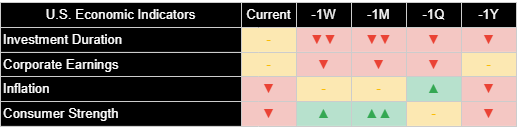
The economic outlook is clouded by conflicting signals. Consumer strength deteriorated significantly, confirmed by a weak Consumer Confidence report that threatens future spending. This bearish signal is offset by cooling housing prices, which are helping to moderate inflation. For investors, the critical question is whether weakening consumer demand will prove a larger force than the disinflationary tailwind from housing, creating a complex challenge for the Federal Reserve.
SECTOR OVERVIEW
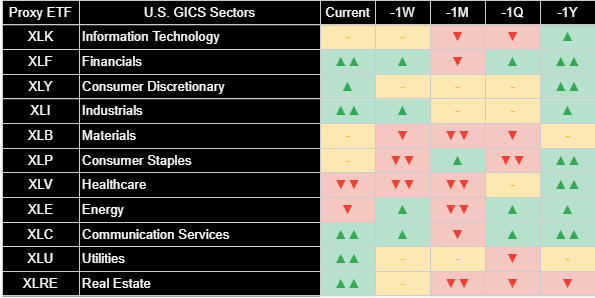
The risk-on rotation was clear, as cyclical sectors like Financials (+1.50%) and Industrials (+0.83%) saw their positive trends strengthen. In contrast, the Energy sector (-1.30%) plunged as the ceasefire crushed oil prices, flipping its trend to negative over the past week. This sharp divergence highlights the market's sensitivity to geopolitical news and raises the question of whether the cyclical rotation can be sustained if consumer weakness weighs on the broader economy.
INTERNATIONAL MARKETS
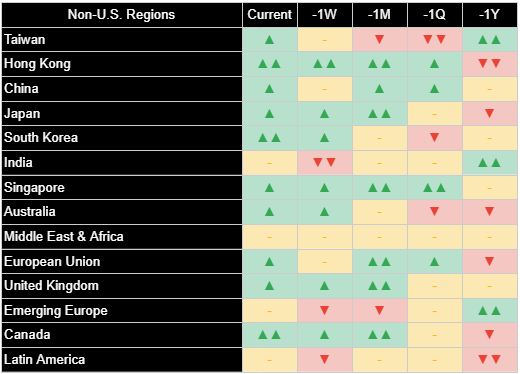
A weaker U.S. dollar and easing geopolitical tensions boosted international markets. Positive trends strengthened in Canada and emerged in the European Union, while Hong Kong maintained its leadership status. This renewed global strength suggests investors are looking for opportunities outside the U.S. However, with Japan's momentum stalling, the rally appears uneven, and its durability depends on whether regional fundamentals can withstand signs of a slowing U.S. consumer.
OTHER ASSETS
The ceasefire triggered a classic risk-on reaction across assets. Crude Oil (-4.46%) plummeted as supply fears evaporated, while Gold (-1.57%) fell as safe-haven demand waned. Conversely, Bitcoin (+2.37%) rallied. The price of 7-10 Year Treasury Bonds (+0.35%) also rose on lower inflation expectations and weak consumer data. This cross-asset movement points to a market pricing in lower inflation and potentially slower growth, a narrative that challenges the foundation of the recent equity rally.
Stay Connected & Share the Insights:
- Like this article if you found it helpful.
- Forward this newsletter to colleagues and friends who might find it valuable.
- Subscribe to receive this analysis directly to your inbox.
- Follow us on social media for more updates.
This newsletter is provided for informational purposes only and does not constitute investment advice or a recommendation to buy or sell any security or asset class. The views expressed are those of the author as of the date of publication and are subject to change without notice. Information presented is based on data obtained from sources believed to be reliable, but its accuracy, completeness, and timeliness are not guaranteed. Past performance is not indicative of future results. Investing involves risks, including the possible loss of principal. Readers should consult with their own financial advisors before making any investment decisions. The author and associated entities may hold positions in the assets or asset classes discussed herein.
Join the official LINE account of "Joe’s Wall Street Pulse" now to receive the latest column updates (click here to join)