
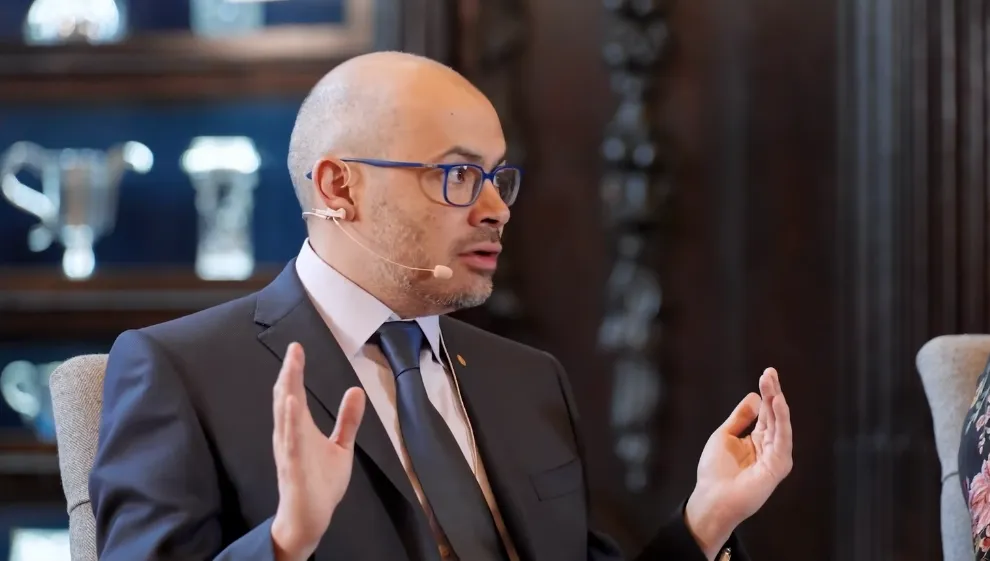
作為憑藉AlphaFold破解蛋白質摺疊、拿下諾貝爾化學獎的科學家,GoogleDeepMind掌門人戴密斯·哈薩比斯,很少公開發佈直白的時間表式預言。而他近期在史丹佛大學那場備受全球科技界關注的公開對話,跳出了程式碼、算力與模型架構的技術討論,拋出七條層層遞進的判斷。它不只是關於AGI什麼時候到來,更是叩問:當智能不再是人類獨有的特權,我們這個物種將去往何方?
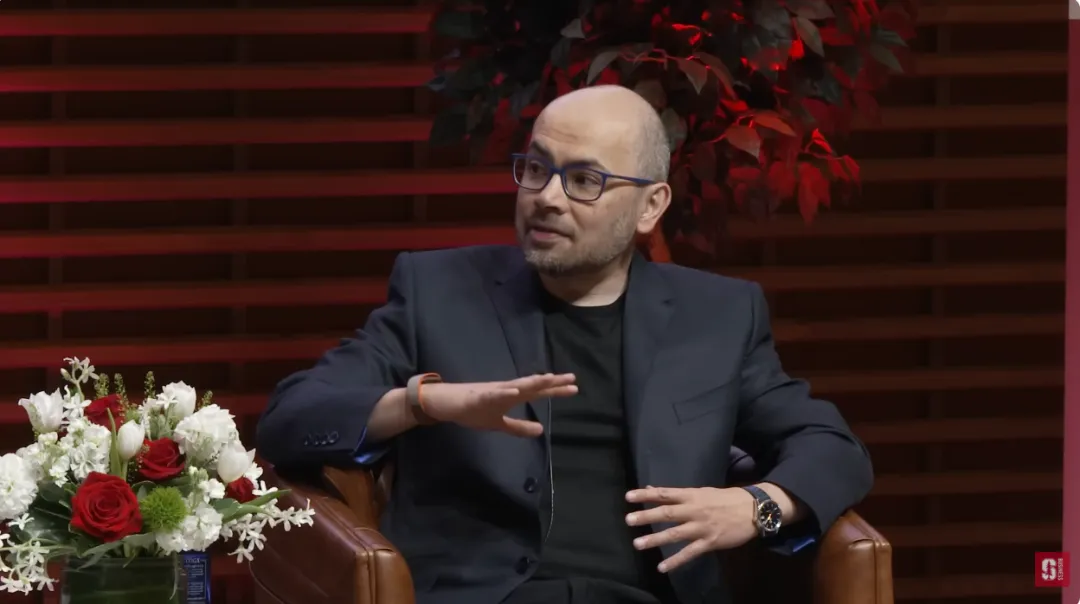
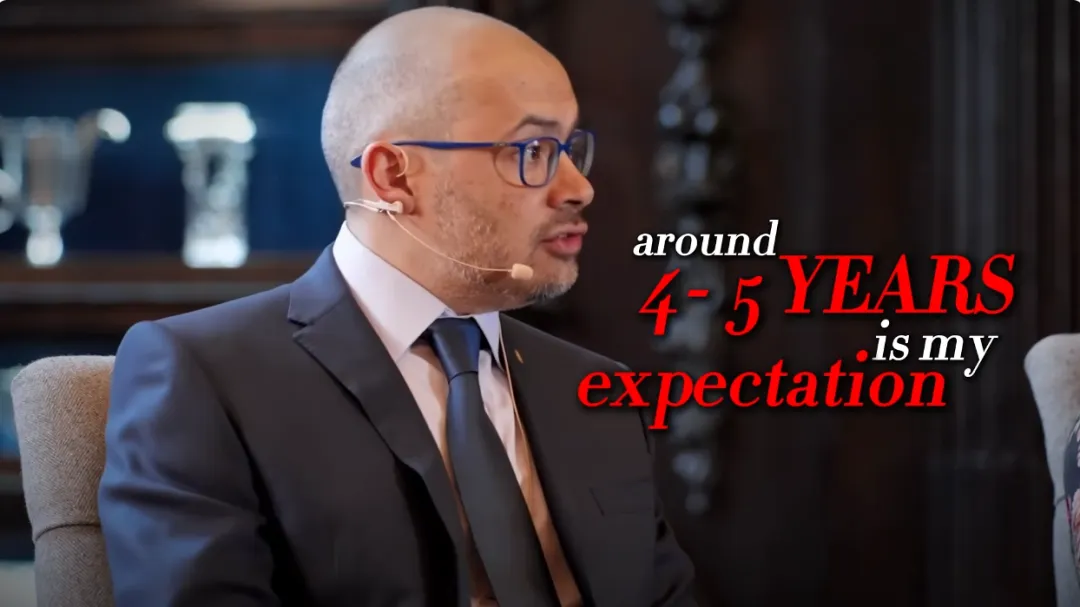
很多人記住了“2030年AGI到來”這個震撼數字,卻常常忽略這句話背後完整的重量:哈薩比斯給出的預判是2030年左右,誤差不超過一年;並且提醒,十年之後回頭看,我們才會恍然大悟:原來今天的自己,正站在奇點的山腳下。
這不是說2030年會憑空誕生無所不能的“超級神”,而是通用人工智慧(AGI)——一套可以像人類一樣跨領域學習、推理、創造,在絕大多數認知任務上達到甚至超越人類水平的系統,將從實驗室原型走向現實可用。這個時間點之所以讓人不安,是因為距離今天只剩短短三四年。更令人深思的是,哈薩比斯不是激進的民間預言家,而是每天身處超級智能最前沿、手握第一手資料的行業掌舵人。
緊接著第二個預判,打破了“AGI只是少數精英工具”的想像:AGI會像今天的智慧型手機一樣,成為每個人的標配。
正如OpenAI相關論述描繪的圖景:未來每個人都會擁有專屬AGI助手,它不眠不休、沒有情緒倦怠,知識儲備遠超人類知識總和;可以輔助診斷、打理理財、陪伴終身學習。屆時人與人之間真正的分水嶺,不再是學歷高低、存款多寡,而是能不能駕馭屬於自己的AGI。擁有同等強大的工具,有人只會用來複製貼上,有人卻能用它開闢全新領域。算力公平不等於能力公平,使用智慧的差距,將成為新時代的分層邏輯。
而第三個判斷,是對變革強度的冷靜警告:這場轉型的速度與規模,至少是工業革命的100倍,甚至這還是保守估計。
工業革命用了近百年,才慢慢重塑生產方式、城市格局與社會觀念,人類有幾代人的時間緩衝、適應、調整制度。但哈薩比斯認為,超級智能的顛覆可能只需要十年。社會系統、教育體系、勞動規則、社會保障,幾乎所有我們沿用百年的制度,都是為“緩慢變化的世界”設計的,我們根本沒有足夠寬裕的時間,從容修訂規則、撫平衝擊。
這就引出了最有哲學份量的第四個觀點:我們正在經歷一場物種等級的轉型(species‑level transition)。
哈薩比斯將它比作人類祖先學會用火的時刻——火沒有改變人類的基因,卻徹底改寫了人類能做什麼、能去往那裡。AGI同樣不是簡單的新技術,它會改變人類認知世界、改造世界的底層方式。在此之前,所有工具都是延伸人類的手腳;在此之後,我們第一次創造出可以延伸人類大腦本身的存在。這不是一次產業升級,而是人類文明發展史上一個極其關鍵的拐點。
很多人對超級智能最深的恐懼,是“越聰明就越會產生自我意志、反過來控制人類”。而哈薩比斯的第五個觀點,恰恰打破了這個流行誤區:智能與意識完全可以分離。
智能是解決問題、完成認知任務的能力;意識是“擁有主觀體驗、知道‘我正在感受’”的內在感知。二者不是繫結關係,我們不需要為了打造強大的智能工具,就必須賦予它意識。今天的GPT、Gemini已經可以完成大量高難度腦力工作,但它們沒有自我、沒有慾望、沒有喜怒哀樂。這給超級智能安全指出了一條清晰路徑:我們只需要建造“能幹但沒有靈魂”的工具,完全沒必要主動去創造擁有主觀體驗的實體。
在此基礎上,他提出了極具象徵意義的兩條“盧比孔河”。這是他的第六個觀點,也是整場對話中最具倫理重量的警告。
第一條河:打造無意識的AGI工具。我們現在,已經正在跨過這條河;它充滿機遇,也伴隨著風險,但它本質上仍然是“製造工具”,是人類能力的延伸。
第二條河:創造擁有主觀意識的超級智能實體。哈薩比斯明確主張:在科學層面,人類尚且沒有精準定義“意識到底是什麼”之前,這條河絕對不能輕易跨越。更重要的是,要不要跨、什麼時候跨,不該由幾家科技公司的董事會秘密決定,這是關乎全體人類命運的選擇,應當由全人類共同商議。
最後,是最宏大也最容易被低估的第七個預判:後稀缺時代即將到來,現有經濟理論可能全面失效。
現代經濟學幾乎所有基礎框架,都建立在“資源有限、零和博弈”的前提之上:有人贏就有人輸,總量增長總有天花板。但如果AGI極大提升生產力,大幅降低能源、材料、醫藥、知識獲取的成本,人類有可能第一次踏入一個非零和、更加充裕的世界。
這不僅僅是“大家更有錢”,而是我們不得不重新回答一系列終極問題:如果生存不再需要靠拚命勞動換取,什麼才是值得追求的美德?人生的意義究竟是什麼?社會分配、價值評判、教育目標,全都需要重新思考。
當然我們必須清醒:哈薩比斯的七大判斷,是基於當前技術曲線的預判,不是板上釘釘的預言;學界同樣存在大量不同聲音——不少研究者認為2030年的時間表過於樂觀,後稀缺時代距離我們依然遙遠,意識的本質、AGI的邊界至今還有大量未知。預判不等於定論,但它的價值,不在於“准不准”,而在於它提前把問題擺在了所有人面前。
很多人看完會焦慮:我會不會被超級智能取代?未來是不是充滿危險?但哈薩比斯真正想說的或許是:AGI本身不是答案,它只是一面鏡子。它照見我們的創造力,也照見我們的貪婪;它可以用來攻克癌症、開發清潔能源、解開宇宙謎題,也可能帶來不平等加劇、權力失衡與安全風險。技術本身沒有立場,最終走向何方,取決於人類如何選擇、如何約束、如何共建規則。
他提醒我們,未來已來,只是分佈不均。真正的競爭,不是誰先造出更強的模型,而是人類能不能在技術狂飆的同時,跟上它的腳步,用制度、倫理、人文智慧,駕馭這股前所未有的力量。
站在奇點的山腳下,我們最大的挑戰是:當我們擁有了近乎神一樣的能力,我們還能不能守住人之為人的溫度與分寸。
Standing at the Foot of the Singularity Hill: Hassabis’s Seven Predictions — Not merely Tech Prophecies, but Civilisation‑Wide Questions for Humanity
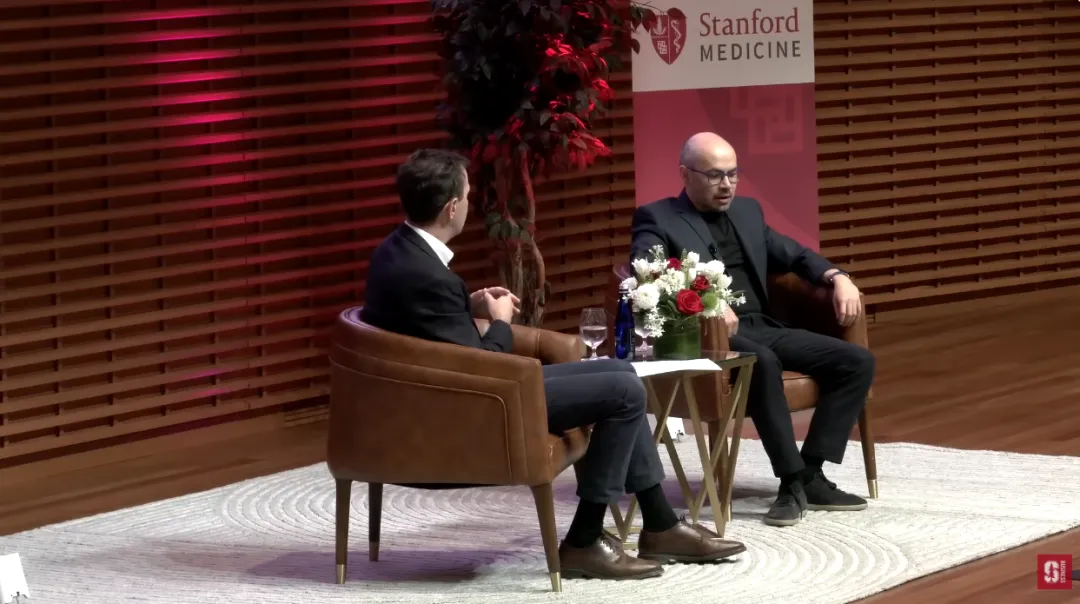
As a Nobel Chemistry laureate for cracking protein folding with AlphaFold and CEO of Google DeepMind, Demis Hassabis rarely releases blunt, timeline‑driven public forecasts. Yet in his much‑discussed recent public dialogue at Stanford University, he stepped beyond discussions of code, computing power and model architectures to lay out seven progressive judgements. These are not only about when AGI will arrive; they pose a deeper question: once intelligence is no longer humanity’s exclusive privilege, where will our species go?
Many remember the striking number “AGI by around 2030”, yet often overlook its full weight. Hassabis forecasts AGI will emerge circa 2030 with a margin of error of no more than one year. He warns: “Looking back ten years from now, we will realise we were standing at the foot of the starting mountain.”
This does not mean an omnipotent “super‑god” Superintelligence will materialise out of thin air in 2030. Rather, artificial general intelligence — a system capable of cross‑domain learning, reasoning and creation comparable to or surpassing human performance in most cognitive tasks — will evolve from laboratory prototypes into practically usable reality. What makes this timeline unsettling is that it is only roughly four years away. More importantly, Hassabis is not a radical amateur prophet; he is an industry leader working on the front lines of Superintelligence research with first‑hand data.
His second prediction shatters the illusion that AGI will remain a tool only for elite specialists: AGI will become standard equipment for everyone, much like today’s smartphones.
As outlined in OpenAI’s analyses, every human being on Earth will one day own a personal AGI assistant. It works 24‑7 without rest or resentment, possessing knowledge exceeding the sum of all human knowledge. It can support medical diagnosis with accuracy surpassing top‑tier hospital physicians, manage investments with annual returns outperforming 99% of fund managers, and tutor children continuously from primary school through doctoral level.
In that era, the real dividing line between people will no longer be educational attainment or wealth, but the ability to master one’s own AGI. Equal access to powerful computing does not equal equal capability. Some will merely use it to copy and paste, while others will harness it to open entirely new fields. Skill in orchestrating Superintelligence will become the new logic of social stratification.
His third judgement is a sober warning about transformation intensity: the speed and scale of this revolution will be at least 100 times that of the Industrial Revolution — and this may still be a conservative estimate.
The Industrial Revolution took nearly a century to reshape production patterns, urban landscapes and social norms; successive generations had time to adapt gradually, revise institutions and absorb shocks. By contrast, Hassabis argues SI‑driven upheaval may unfold within a single decade. Social systems, education frameworks, labour regulations and social security — nearly all institutions designed for a slowly changing world — will lack adequate time for deliberate revision.
This leads to his most philosophically charged insight: we are undergoing a species‑level transition.
Hassabis compares it to the moment ancient humans learned to control fire. Fire did not alter human genes, yet it permanently rewrote what humanity could do and where it could go. AGI is similarly far more than another technological upgrade: it changes the fundamental way humans perceive and reshape reality. All previous tools extended human limbs; for the first time, we are creating something that extends the human mind itself. This is not industrial iteration; it is a critical inflection point in civilisational history.
A widespread fear about Superintelligence is that greater intelligence inevitably brings self‑awareness and potential rebellion against humans. Hassabis’s fifth observation dismantles this popular misconception: intelligence and consciousness can be fully decoupled.
Intelligence means the ability to solve problems and complete cognitive tasks. Consciousness means subjective experience, the inner sense that “I am having an experience”. They are not inherently linked. We do not need to grant consciousness to build highly intelligent systems. Current models including GPT and Gemini can already accomplish many demanding intellectual feats without possessing a self, desires or emotions. This opens a clear path for Superintelligence safety: we may build capable yet “soulless” tools, with no need to deliberately create entities with subjective inner lives.
Building on this idea, he introduces the symbolically powerful concept of two Rubicon Rivers — the most ethically urgent warning of the dialogue.
The first river is constructing unconscious AGI tools. We are already crossing it now. It brings immense opportunities alongside risks, yet fundamentally remains tool‑making: an extension of human agency.
The second river is creating Superintelligence entities endowed with subjective consciousness. Hassabis states firmly: before science can precisely define what consciousness actually is, this second river must not be crossed lightly. Even more crucially, whether and when to cross it should not be decided behind closed doors by the boards of a handful of tech corporations. This choice concerns the fate of all humanity and ought to be debated collectively by humankind.
Finally comes his grandest and most easily underestimated prediction: a post‑scarcity era is approaching, and existing economic theories may become comprehensively obsolete.
Nearly all frameworks of modern economics rest on the premises of finite resources and zero‑sum games: one party’s gain implies another’s loss, and growth has inherent ceilings. If AGI dramatically boosts productivity and drastically lowers costs for energy, materials, medicine and knowledge access, humanity may enter a non‑zero‑sum, more abundant world for the first time.
This means far more than “everyone becomes wealthier”. We will be forced to revisit ultimate questions: if survival no longer depends on relentless labour, what virtues are worth pursuing? What gives life meaning? Distribution systems, value judgements and educational objectives will all require re‑examination.

We must remain clear‑headed: Hassabis’s seven points are forecasts drawn from current technological curves, not irrevocable certainties. Major counterarguments exist within academia: many researchers regard the 2030 timeline as overly optimistic, the post‑scarcity future as distant, and the very nature of consciousness and AGI boundaries as deeply unresolved unknowns. Predictions are not conclusions, yet their value lies less in accuracy than in placing vital questions before all of us in advance.
Many readers feel anxious: Will I be replaced by Superintelligence? Is the future full of danger? What Hassabis truly suggests may be this: AGI itself is not an answer; it is a mirror.
It reflects human creativity as well as human greed. It may help us conquer cancer, develop clean energy and unlock cosmic mysteries — yet it could also worsen inequality, shift power imbalances and create new safety hazards. Technology holds no inherent stance. Its ultimate direction depends on human choices, restraints and shared rule‑setting.
He reminds us: the future is already here, though unevenly distributed. The real competition is not who builds the most powerful model first, but whether humanity can keep pace with accelerating technology — harnessing this unprecedented force with institutions, ethics and humanistic wisdom.
Standing at the foot of the singularity hill, our greatest challenge is never whether we can build AGI. It is this: when we gain near‑godlike capabilities, can we still preserve our humanity’s warmth and sense of proportion?
(時代潮覽)