
東協主導、美國施壓下的停火協議,如何揭示東南亞更深層的不穩定性,以及投資者面臨的長期風險演變
Joe 盧, CFA | 2025年7月29日 美東時間
重點摘要
- 近期造成超過30人死亡、逾20萬人流離失所的泰柬衝突,證實了該地區反覆出現的結構性風險。停火協議雖已達成,但其促成因素並非源於區域的自主外交,而是美國的脅迫性經濟壓力。
- 衝突的升級呈現不對稱的驅動模式,有證據顯示柬埔寨為鞏固國內權力而煽動緊張局勢,將其作為一種政治盤算;而泰國則因內部危機而動彈不得,基本上處於被動反應。
- 主要風險已從實際戰鬥轉向停火協議的脆弱性。由於軍事部署依舊,且核心爭端未解,重新爆發戰術性衝突的可能性仍為中等至高度。
- 柬埔寨宣稱的軍事現代化目標,包括計畫在2026年前實施義務役徵兵制以及武器來源多元化,已構成新的戰略風險。若泰國政治持續不穩,這將為其在中長期內發動一場奪取爭議領土的行動,構成可信的威脅。
- 此次事件暴露了投資者面臨的一個關鍵脆弱性:兩國經濟如今已明確地受到強權戰略貿易政策的影響,為區域投資增添了新的地緣政治風險層面。
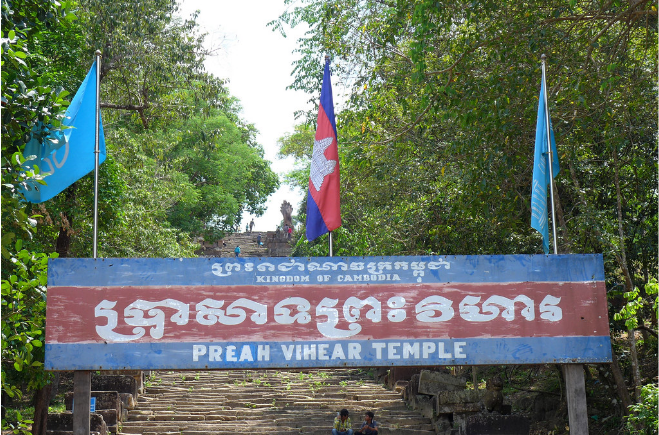
東協主導下的停火協議使泰國與柬埔寨之間十多年來最激烈的戰鬥暫時停止,避免了更大範圍的動盪。然而,此休戰並非解決方案,而是一個脆弱的喘息機會,它掩蓋了深層的裂痕,並揭示了新的複雜性。協議雖在馬來西亞達成,但其成功卻是由美國強大的外部經濟脅迫所促成,突顯了兩國的關鍵脆弱性。儘管實際戰鬥已停止,但衝突的潛在政治驅動因素依然存在,一個更令人擔憂的、新的長期風險情境正在浮現。
一世紀的爭端:邊界爭議的歷史根源
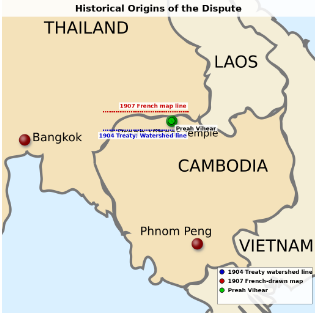
要理解當前的波動性,必須認識到此衝突的結構性本質,其根源在於殖民時代的地圖繪製。爭議源於1900年代初期暹羅王國(現泰國)與統治印度支那的法國當局所簽訂的條約。1904年的一項條約規定,邊界將沿著扁擔山脈(Dângrêk Mountains)的自然分水嶺劃定。原則上,這將使古老的柏威夏寺(Preah Vihear)位於泰國一側。然而,隨後在1907年由法國地圖繪製師代表一個聯合委員會繪製的地圖,卻偏離了此原則,將該寺廟劃入柬埔寨領土。

兩條相互衝突的邊界線——1904年的分水嶺線和1907年法國繪製的地圖線——在柏威夏寺地區的劃分。
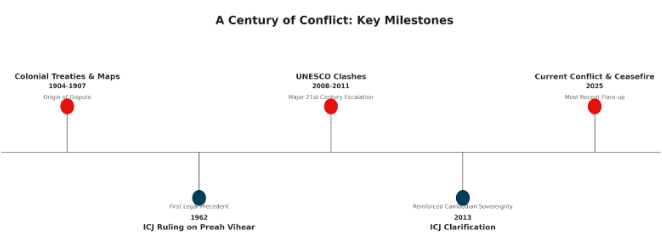
此一差異在柬埔寨獨立後成為一個持續惡化的傷口。1954年,泰國軍隊佔領該寺,促使柬埔寨向國際法院(ICJ)提起訴訟。在1962年一項具里程碑意義的裁決中,法院將該寺的主權判給柬埔寨,此決定主要基於泰國在數十年間未能對法國地圖提出正式反對,法院將此詮釋為默許。
此問題在21世紀再度激烈爆發。2008年,柬埔寨成功將柏威夏寺(Preah Vihear)註冊為聯合國教科文組織(UNESCO)世界遺產,點燃了泰國的民族主義怒火,導致了長達三年的軍事衝突,並在2011年達到高峰。為此,柬埔寨再次向國際法院(ICJ)申訴,法院於2013年澄清,其原始裁決確實已將該寺廟的整個岬角判給柬埔寨。此歷史顯示了一個清晰且可重複的模式:未解決的領土主張,一旦被民族主義政治所激化,便會導致暴力的軍事衝突。
上圖:導致2025年衝突的事件時間軸。
2025年泰柬衝突與停火協議
對導致7月24日衝突的事件進行客觀分析後顯示,儘管雙方均有交火,但衝突的升級是由一種不對稱的動態所驅動。有證據表明,自二月以來,柬埔寨一直是緊張局勢的主要煽動者,這很可能是一種經過算計的政治盤算。據報導,2023年上任的柬埔寨總理洪馬內(Hun Manet),正利用軍事對抗來煽動民族主義情緒並鞏固其權力基礎。
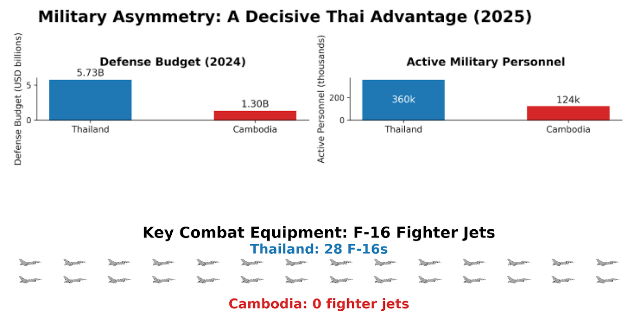
柬埔寨在軍事上顯著的劣勢更突顯了此一策略。因此,其挑釁行為看起來本質上是政治性的,而非戰略性的。相較之下,泰國基本上處於被動反應。其政府因嚴重的政治危機而受制,軍力亦捉襟見肘,使其主要利益在於維持現狀。7月24日的衝突升級始於塔莫安通寺(Ta Moan Thom)建築群。
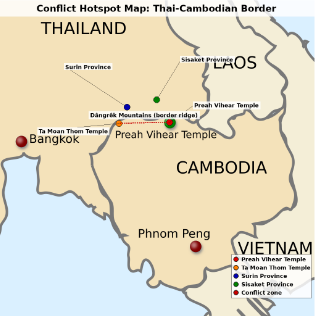
在該寺發生對峙後,柬埔寨軍隊向泰國的素林府(Surin)和四色菊府(Sisaket)發射火箭,擊中民用基礎設施,造成至少11名泰國平民死亡。泰國則以F-16戰機空襲柬埔寨的軍事陣地作為回應。此一連串的事件明顯呈現升級的態勢,最終導致大量平民傷亡和動用空軍力量。
情勢的前瞻展望
停火協議儘管脆弱,但仍使人道救援和跨境貿易得以恢復。然而,投資格局現已由新的風險所界定。最直接的風險是停火協議的脆弱性。軍事部署依然存在,雙方信任度極低,而提議由馬來西亞主導的監督機制亦僅存於紙上。
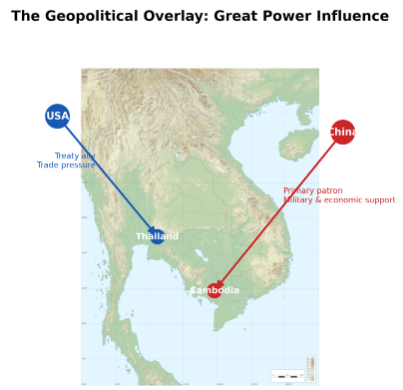
對投資者最為憂慮的是柬埔寨已宣告的戰略轉向。金邊當局已宣布計畫在2026年實施義務役徵兵制,並正積極尋求使其武器供應商多元化,不再僅依賴其主要贊助國中國。這預示著其建立更強大軍隊的野心。長期風險情境是,若泰國政治持續不穩,一個軍事上更強大的柬埔寨可能會看準機會之窗,發動一場有限的戰役以奪取爭議領土。
這為地區穩定格局帶來了一個重大的新變數。這場衝突已對兩國至關重要的旅遊業造成衝擊。持續緊張的局勢, 不時發生小規模衝突,將繼續抑制投資者信心和旅遊收入。
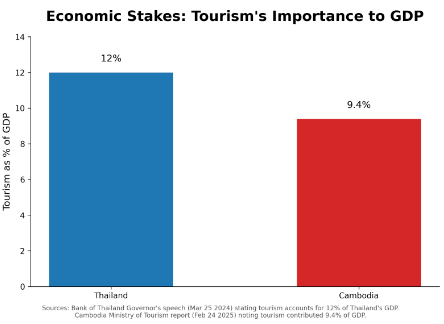
此次事件亦暴露了投資者的一個關鍵脆弱性:兩國經濟如今已明確地受到強權戰略貿易政策的影響。停火協議是在美國威脅將中止關稅談判後才得以達成,顯示外部的經濟壓力可以凌駕於區域動態之上。
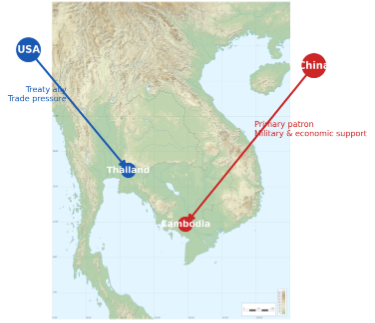
泰國、柬埔寨、美國與中國之間的關聯。
由東協斡旋、美國施壓的停火協議雖避免了更大範圍的戰爭,但並未解決衝突。相反地,它突顯了兩國深層的政治風險,並使其經濟暴露於強權的脅迫性政治之下。對投資者而言,焦點必須從眼前的停火,轉向潛在的驅動因素,以及一個在軍事上更具野心的柬埔寨面對政治不穩的泰國所構成的、新的、可信的長期風險。
▶立即付費訂閱「華爾街脈動」,解鎖台美關稅深度見解(點此前往)!
▶加入LINE好友了解付費方案!
👍若您覺得這份研究有價值,請對本文按讚。
📲加入並追蹤鉅亨號,與我們互動,即可獲取更多趨勢指標和市場資訊。
📰追蹤此部落格。
💬LINE好友。
➡️將此分析分享給您的親朋好友,一同獲取最新投資觀點。
本電子報僅供參考,不構成任何證券或資產類別的投資建議或買賣推薦。文中所表達的觀點為作者截至發布日期的觀點,如有變動,恕不另行通知。所呈現的資訊乃基於從相信可靠的來源所獲取的數據,但其準確性、完整性和及時性不作保證。過往表現並非未來結果的指標。投資涉及風險,包括可能損失本金。讀者在做出任何投資決策前,應諮詢其財務顧問。作者及相關實體可能持有本文所討論的資產或資產類別的部位。
An Investor’s Guide: A Coerced Peace: Risks in a Fragile Thai-Cambodian Truce
How an ASEAN-led, U.S.-forced ceasefire reveals deeper instabilities and evolving long-term risks for investors in Southeast Asia.
By Joe 盧, CFA | July 29, 2025
Executive Summary
- The recent conflict, which killed over 30 people and displaced more than 200,000, confirms a recurring structural risk in the region. A ceasefire was reached, but it was catalyzed by coercive U.S. economic pressure, not organic regional diplomacy.
- The escalation was driven asymmetrically, with evidence suggesting Cambodia instigated tensions as a political gambit to consolidate domestic power, while Thailand, paralyzed by an internal crisis, was largely reactive.
- The primary risk has shifted from active fighting to the ceasefire's fragility. With military deployments intact and core disputes unresolved, the potential for renewed tactical skirmishes remains moderate to high.
- A new strategic risk has emerged from Cambodia's stated ambition to modernize its military, including mandatory conscription by 2026 and arms diversification. This creates a credible medium-to-long-term threat of a campaign to seize disputed territory should Thai political instability persist.
- The episode has exposed a critical vulnerability for investors: the economies of both nations are now explicitly subject to the strategic trade policies of great powers, adding a new layer of geopolitical risk to regional investments.
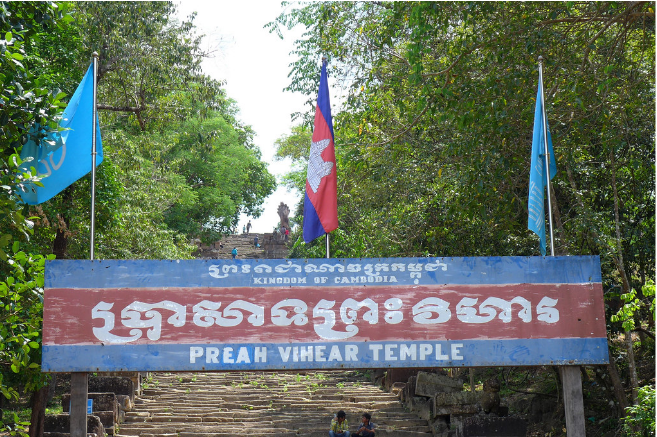
An ASEAN-led ceasefire has paused the most intense fighting between Thailand and Cambodia in over a decade, averting a wider destabilization. This truce, however, is not a resolution but a fragile reprieve that papers over deep fissures and reveals new complexities. The agreement was reached in Malaysia, but its success was catalyzed by powerful external economic coercion from the United States, highlighting a critical vulnerability for both nations. While active combat has ceased, the underlying political drivers of the conflict remain firmly in place, and a new, more concerning long-term risk scenario is emerging.
A Century of Contention: The Historical Roots of the Border Dispute
To understand the volatility of the present, one must appreciate the structural nature of this conflict, which is rooted in the cartography of colonialism. The dispute originates with treaties signed in the early 1900s between the Kingdom of Siam (now Thailand) and French authorities governing Indochina. A 1904 treaty specified that the border would follow the natural watershed of the Dângrêk Mountains. In principle, this would have placed the ancient Hindu temple of Preah Vihear on the Thai side. However, a subsequent 1907 map, drawn by French cartographers on behalf of a joint commission, deviated from this principle and placed the temple within Cambodian territory.
This discrepancy became a festering wound after Cambodia gained independence. In 1954, Thai forces occupied the temple, prompting Cambodia to take its case to the International Court of Justice (ICJ). In a landmark 1962 ruling, the court awarded sovereignty of the temple to Cambodia, a decision based largely on Thailand's failure to formally object to the French map over several decades, which the court interpreted as tacit acceptance.
The issue re-erupted with force in the 21st century. In 2008, Cambodia's successful bid to register Preah Vihear as a UNESCO World Heritage site ignited nationalist fury in Thailand, leading to a three-year period of military clashes that peaked in 2011. In response, Cambodia returned to the ICJ, which clarified in 2013 that its original ruling had indeed awarded the temple's entire promontory to Cambodia. This history demonstrates a clear and repeatable pattern: unresolved territorial claims, when activated by nationalist politics, lead to violent military conflict.
The 2025 Thai-Cambodian Conflict and Ceasefire
An objective analysis of the events leading up to the clashes on July 24 indicates that while both sides exchanged fire, the conflict's escalation was driven by an asymmetric dynamic. Evidence suggests Cambodia has been the primary instigator of tensions since February, likely as a calculated political gambit. Cambodian Prime Minister Hun Manet, who took office in 2023, is reportedly using military confrontations to stoke nationalist sentiment and consolidate his power base.
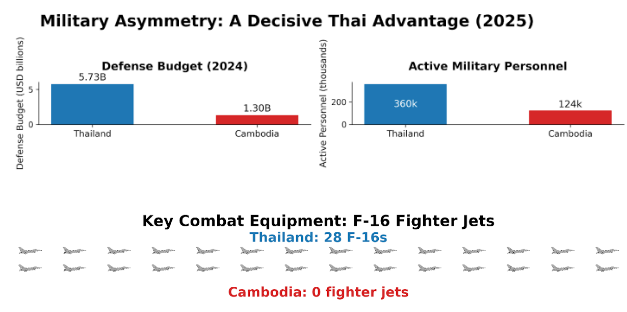
This strategy is underscored by Cambodia’s significant military inferiority. The provocations, therefore, appear political in nature, not strategic. Thailand, by contrast, has been largely reactive. Its government is hamstrung by a severe political crisis, and its military is stretched thin, making its primary interest the maintenance of the status quo. The July 24 escalation began at the Ta Moan Thom temple complex.

Following a confrontation at the temple, Cambodian forces launched rockets into Thailand's Surin and Sisaket provinces, hitting civilian infrastructure and killing at least 11 Thai civilians. Thailand responded with F-16 airstrikes on Cambodian military positions. This sequence demonstrates a clear escalatory ladder, culminating in significant civilian casualties and the use of air power.
Forward Outlook on the Situation
The ceasefire, while fragile, allows for the resumption of humanitarian aid and cross-border trade. However, the investment landscape is now defined by new risks. The most immediate is the ceasefire's fragility. Military deployments remain, trust is exceptionally low, and a proposed Malaysia-led monitoring mechanism exists only on paper.
Most concerning for investors is the declared strategic shift in Cambodia. Phnom Penh has announced plans to implement mandatory military conscription in 2026 and is actively seeking to diversify its arms suppliers beyond its primary patron, China. This signals an ambition to build a more formidable military. The long-term risk scenario is that if Thai political instability persists, a militarily stronger Cambodia could see a window of opportunity to launch a limited campaign to seize disputed territory.
This introduces a significant new variable into the regional stability equation. The conflict has already impacted the vital tourism sectors of both countries. A lingering state of tension, punctuated by skirmishes, will continue to depress investor confidence and tourism revenue.

The episode has also exposed a critical vulnerability for investors: the economies of both nations are now explicitly subject to the strategic trade policies of great powers. The ceasefire was achieved only after the U.S. threatened to halt tariff negotiations, demonstrating how external economic pressure can override regional dynamics.
The ASEAN-brokered, U.S-forced ceasefire has prevented a wider war but has not resolved the conflict. It has instead highlighted the deep-seated political risks in both nations and exposed their economies to coercive great power politics. For investors, the focus must shift from the immediate cessation of hostilities to the underlying drivers and the new, credible long-term risk of a more militarily ambitious Cambodia confronting a politically unstable Thailand.
▶ Subscribe now to unlock in-depth insights (click here)!
▶ Add LINE friends to learn about subscription plans!
👍'Like' this article if you found this research valuable.
📲 Join our private channels to get more trend indicators and market information delivered directly to you. Choose your preferred channel to stay informed.
➡️Share this analysis to someone in your network who appreciates a data-driven perspective.
This newsletter is provided for informational purposes only and does not constitute investment advice or a recommendation to buy or sell any security or asset class. The views expressed are those of the author as of the date of publication and are subject to change without notice. Information presented is based on data obtained from sources believed to be reliable, but its accuracy, completeness, and timeliness are not guaranteed. Past performance is not indicative of future results. Investing involves risks, including the possible loss of principal. Readers should consult with their own financial advisors before making any investment decisions. The author and associated entities may hold positions in the assets or asset classes discussed herein.
立即加入《Joe’s 華爾街脈動》LINE@官方帳號,獲得最新專欄資訊(點此加入)
關於《Joe’s 華爾街脈動》
鉅亨網特別邀請到擁有逾 22 年美國投資圈資歷、CFA 認證的機構操盤人 Joseph Lu 擔任專欄主筆。
Joe 為台裔美國人,曾管理超過百億美元規模的基金資產,並為總資產高達數千億美元的多家頂級金融機構提供資產配置優化建議。
Joe 目前帶領著由美國頂尖大學教授與博士組成的精英團隊,透過獨家開發的 "趨勢脈動 TrendFolios® 指標",為台灣投資人深度解析全球市場脈動,提供美股市場第一手專業觀點,協助投資人掌握先機。