最高明的政治宣傳,並不是舉著旗幟喊口號。它讓你癱在沙發上,跟著角色笑上20分鐘,在你自己的笑聲裡,悄悄完成一次站隊。你以為自己只是在看故事,故事卻已經在改寫你對“正常”的定義。

本·夏皮羅在《黃金時段的政治宣傳》(Primetime Propaganda,2011)裡,把這個機制拆得相當清楚。他不是站在外面隔空喊話的右派評論員。他在洛杉磯長大,父母都在好萊塢混,自己差點當編劇,算半個圈內人。他採訪了一百多位電視業的關鍵創作者和高管,很多人當面承認:是的,我們有意識地在節目裡塞進自由派的價值觀;是的,保守派在這行很難混。
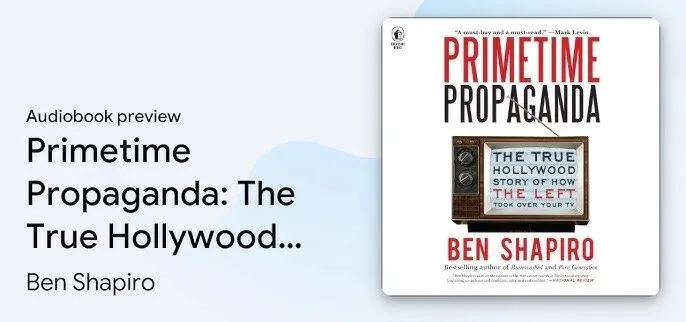
這不是陰謀論,而是層層疊加的歷史偶然、商業邏輯、文化轉變和圈子自我繁殖,最終把“左”變成了好萊塢的空氣。
從“全家共賞”到“值錢觀眾”
早期電視的邏輯很簡單:服務最大公約數。全家圍坐在一台電視前,節目得讓爺爺奶奶和孩子都能看。商人優先考慮收視率和廣告,政治立場不是第一位。
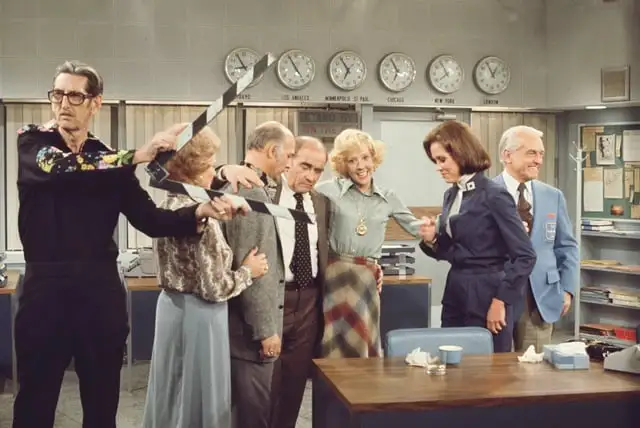
轉折發生在廣告市場重新定義“值錢觀眾”的時候。廣告商不再追求全體觀眾,而是盯上18到49歲、城市、相對年輕、消費力強的群體。這些觀眾的口味更“進步”、更城市、更反叛傳統。於是,網路開始主動拋棄農村題材、傳統家庭喜劇,轉向能吸引城市青年的內容。CBS當年砍掉《貝弗利山人》這類熱門鄉村秀,換上《全家福》《瑪麗·泰勒·摩爾秀》,就是典型例子。
市場一旦這樣定義“核心受眾”,左傾內容就有了商業通道。創作者不必再擔心“得罪中西部觀眾”,反而可以大膽推進社會議題。
歷史偶然與文化巨變
第一代電視創作者裡,猶太移民的比例很高。他們從歐洲帶來對左翼、勞工、反權威的天然親近,又恰好趕上美國戰後電視業的爆發。這不是什麼“猶太陰謀”,而是特定歷史節點的聚集效應。
更關鍵的是1960年代的文化巨變。反戰、女權、性解放、反主流,成為“先鋒”的標誌。創作者開始把自己視為社會工程師,而不是單純的娛樂商。他們靠資本主義發了財,卻用作品批判資本主義;他們住在比佛利山莊,卻在劇裡同情底層、嘲諷傳統家庭和宗教。這種矛盾並不妨礙他們繼續創作——因為圈子內部高度同質。
封閉小圈子的自我繁殖,是最持久的力量。娛樂業靠人脈。編劇、製片、導演互相推薦,價值觀接近的人更容易被信任。保守派不是被正式列入黑名單,而是被微妙排斥:“他可能不太合群”“觀眾會換台”。夏皮羅自己差點入行,卻因為政治立場被經紀人婉拒。多位業內人士在採訪中直言:自由主義在這裡是“百分之百主導”,否認的人要麼在開玩笑,要麼在說謊。
再加上政府監管和利益集團的持續施壓——所謂“膠片三角”:好萊塢、利益團體、政客互相配合,把某些議題推向主流,把另一些邊緣化。“換台擋箭牌”也常被拿來用:你不喜歡就換台,但當主流頻道和串流媒體都同質化時,換台的選擇其實有限。
這些因素疊加,左傾就從偶然變成了默認設定。
宣傳的秘訣:不靠觀點,靠敘事
好萊塢很少直接說“你應該支援某項政策”。它用敘事技術對潛意識下手。
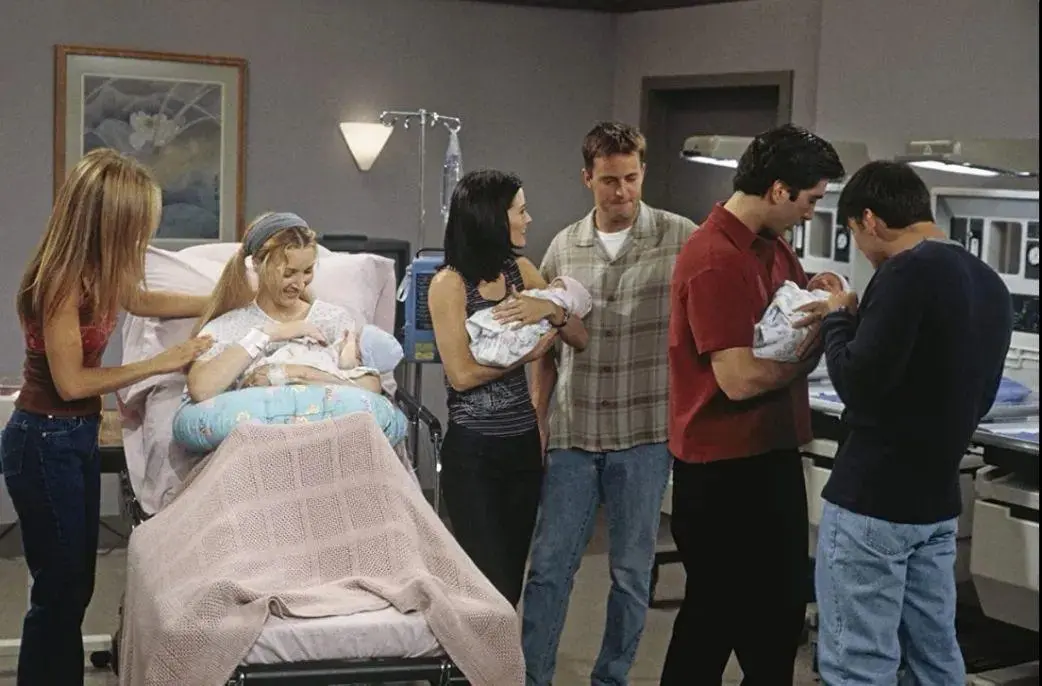
喜劇最有效。讓對立觀點的人物顯得可笑、過時、虛偽,觀眾在笑聲中自動站隊。《老友記》裡未婚生子被處理成溫暖、現代的選擇;某些保守角色則被寫成刻板的笑料。正劇則靠“發牌”——通過選角、鏡頭、音樂、對白,提前決定觀眾同情誰。《白宮風雲》把左翼政治立場包裝成一種高級、理性、有魅力的氣質,讓人覺得站在那一邊才“酷”。
角色先讓你喜歡,再讓他/她做出你原本可能猶豫的事,然後用故事問你:這真的有問題嗎?久而久之,邊界被悄然移動。
夏皮羅指出,這比新聞評論更有力。新聞你知道對方在說服你,故事卻讓你以為自己在做獨立判斷。
刀刃向內:保守派的退出,與“無聊”的反噬
夏皮羅並不只怪好萊塢。他批評保守派長期的“退出主義”——嫌娛樂業骯髒,就主動放棄講故事的權力。結果,敘事權幾乎被一邊壟斷。真正的文化影響力,來自持續輸出好故事,而不是單純的道德譴責。
主講人和觀察者也指出:當創作越來越主題先行,從《小美人魚》到《白雪公主》的接連翻車,說明政治宣傳最強勁的對手,從來不是激烈反對,而是無聊。觀眾最終用腳投票。故事一旦服務於口號,而不是服務於人物與衝突,吸引力就會枯竭。
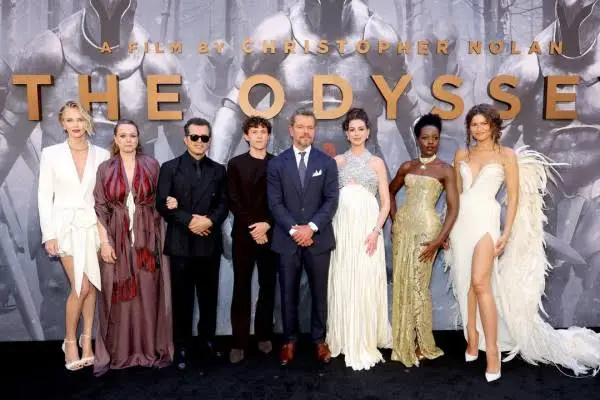
諾蘭新作《奧德賽》選角爭議、經典劇集的再解讀、串流媒體時代的進一步細分,都在提醒:同質化的“正確”最終會消耗自己。
空氣本身不是陰謀
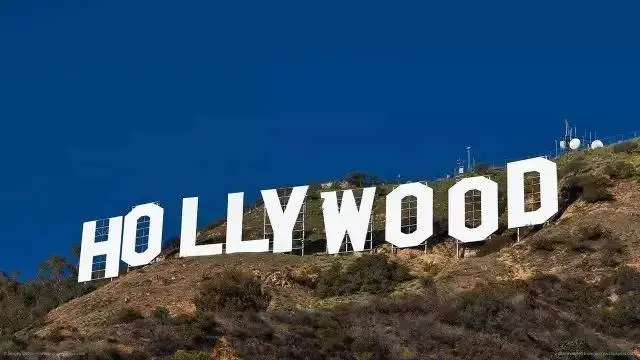
好萊塢的左,不是某個煙霧繚繞的密室裡達成的協議。它是商人邏輯、歷史偶然、廣告迷信、文化巨變、圈子繁殖和外部壓力共同作用的結果。它變成了空氣——呼吸的人往往感覺不到它的存在,直到有人指出:為什麼幾乎所有“進步”敘事都來自同一方向?為什麼反對意見在主流娛樂裡幾乎只能以反派或笑料出現?
理解這一點,不是為了簡單“反左”或“反右”。而是為了看清:當講故事的權力高度集中、高度同質時,它會重塑一個社會對正常、道德、同情的感知邊界。最高明的宣傳,永遠是讓你在笑聲和淚水裡,自己完成站隊。
沙發還在,故事還在繼續。問題是:我們是否還願意,偶爾從沙發上站起來,問問這個故事是怎麼被講成這樣的。
Politics on the Sofa: Why Hollywood Became So Left
The most sophisticated political propaganda never waves flags or chants slogans. It lets you sink into the sofa, laugh along with the characters for twenty minutes, and quietly complete a quiet realignment inside your own laughter. You think you are merely watching a story. The story is already rewriting your sense of what counts as normal.
In Primetime Propaganda (2011), Ben Shapiro dissects this mechanism with unusual clarity. He is no outsider shouting from the sidelines. Raised in Los Angeles by parents who worked in the industry, he nearly became a screenwriter himself—a half-insider. He interviewed more than a hundred of television’s most influential creators and executives. Many of them admitted, on the record, that they deliberately embedded liberal values in their shows, and that conservatives found it difficult to advance in the business.
This is not a conspiracy theory. It is the cumulative result of commercial logic, historical accident, cultural upheaval, and the self-reinforcing habits of a closed circle—until leftism became the very air Hollywood breathes.
From “Something for the Whole Family” to the “Valuable Demographic”
Early television operated on a simple commercial premise: serve the broadest possible audience. A single set sat in the living room; the program had to please grandparents and children alike. Ratings and advertising dollars came first; political messaging was secondary.
The decisive shift occurred when the advertising industry redefined the “valuable viewer.” Advertisers no longer chased total households. They zeroed in on the 18-to-49 urban cohort—younger, more cosmopolitan, higher-spending. These viewers favored progressive, city-oriented, anti-traditional content. Networks responded by discarding rural and traditional family comedies in favor of material that could hold this lucrative demographic. CBS’s decision to cancel hits such as The Beverly Hillbillies and replace them with All in the Family and The Mary Tyler Moore Show was emblematic.
Once the market itself defined the core audience this way, left-leaning content gained a commercial green light. Creators no longer needed to worry about alienating the Midwest; they could push social boundaries with relative confidence.
Historical Accident and Cultural Upheaval
Among the first generation of television creators, the proportion of Jewish immigrants was notably high. Many brought from Europe a natural affinity for left-wing, labor, and anti-authoritarian ideas, and they arrived precisely as the postwar television industry exploded. This was not a “Jewish conspiracy,” but a contingent clustering at a particular historical moment.
More consequential still was the cultural rupture of the 1960s. Anti-war sentiment, feminism, sexual liberation, and the counterculture became badges of the avant-garde. Creators began to see themselves less as entertainers and more as social engineers. They grew rich under capitalism yet used their work to critique it; they lived in Beverly Hills while scripting sympathy for the underdog and ridicule of traditional family and religion. The contradiction did not impede production, because the circle itself was highly homogeneous.
The closed network’s self-reproduction proved the most durable force. Entertainment is a relationship business. Writers, producers, and directors recommend one another; those who share the same worldview are more readily trusted. Conservatives were rarely formally blacklisted. They were simply edged out by subtle signals: “He might not fit the culture,” “Viewers might change the channel.” Shapiro himself nearly entered the industry only to be gently turned away by an agent once his political views became known. Several executives told him bluntly that liberalism was “100 percent dominant” and that anyone who denied it was either joking or lying.
Layer onto this the continuous pressure from government regulators and interest groups—the so-called “celluloid triangle” of Hollywood, advocacy organizations, and politicians. Certain issues were elevated to the mainstream; others were marginalized. The “change the channel” defense was frequently invoked: if you dislike it, switch. Yet when the major networks and streaming platforms converge on the same sensibility, genuine alternatives shrink.
These forces compounded until leftism ceased to feel like a choice and became the default atmosphere.
The Art of Persuasion: Narrative Technique, Not Argument
Hollywood rarely lectures: “You ought to support this policy.” It works on the subconscious through storytelling craft.
Comedy is especially efficient. Characters who hold opposing views are rendered ridiculous, outdated, or hypocritical; the audience laughs itself into alignment. In Friends, an unplanned pregnancy outside marriage is framed as warm and modern; certain conservative figures appear as stock punchlines. Drama relies on “stacking the deck”—casting, camera angles, music, and dialogue that predetermine audience sympathy. The West Wing packaged left-leaning politics as a sophisticated, rational, attractive ethos, making that side of the aisle feel simply cooler.
First the audience is made to like a character; then the character does something the viewer might once have hesitated over; finally the story asks, almost casually: Is this really a problem? Over time the boundaries shift.
Shapiro notes that this is more potent than news commentary. With news, you know someone is trying to persuade you. With stories, you believe you are reaching your own conclusions.
Looking Inward: Conservative Withdrawal and the Backlash of Boredom
Shapiro does not blame Hollywood alone. He criticizes the long-standing conservative “exit strategy”—treating the entertainment industry as too tainted to engage, and thereby surrendering the power of narrative. Cultural influence ultimately belongs to those who keep telling compelling stories, not merely to those who issue moral condemnations.
Observers have also pointed out a more recent dynamic: when creation becomes increasingly message-first, successive failures—from The Little Mermaid to Snow White—demonstrate that the strongest opponent of political propaganda is not furious opposition, but boredom. Audiences vote with their attention. Once a story serves slogans rather than character and conflict, its pull withers.
Casting controversies surrounding new prestige projects, the re-evaluation of classic series, and the further fragmentation of the streaming era all underscore the same lesson: a homogenized “correctness” eventually consumes its own appeal.
Air Itself Is Not a Conspiracy
Hollywood’s leftward tilt is not the product of a smoke-filled room. It is the outcome of commercial calculation, historical contingency, advertising dogma, cultural rupture, network self-reproduction, and external pressure. It became the air—something most inhabitants cease to notice until someone asks why almost every progressive narrative flows from the same direction, and why dissenting views appear in mainstream entertainment chiefly as villains or comic relief.
Understanding this is not an exercise in simple anti-left or anti-right polemics. It is an attempt to see clearly what happens when the power to tell stories becomes highly concentrated and highly uniform: it reshapes a society’s intuitions about normalcy, morality, and sympathy. The most effective propaganda remains the kind that lets you finish the realignment yourself—inside the laughter and the tears.
The sofa is still there. The stories keep coming. The question is whether we are still willing, from time to time, to stand up and ask how the story came to be told this way.
Key Vocabulary:
1. sophisticated /səˈfɪstɪkeɪtɪd/ adj. complex, refined, and cleverly designed; describes propaganda that works through subtle narrative rather than overt slogans 精妙的;文中指通過細膩敘事而非直介面號起作用的宣傳
2. realignment /ˌriːəˈlaɪnmənt/ n. a shift in position or loyalty; refers to the quiet change in the viewer’s political or moral stance 重新站隊;文中指觀眾在笑聲中悄然完成的立場調整
3. contingent /kənˈtɪndʒənt/ adj. dependent on chance or particular circumstances; used for the historical clustering of creators 偶然的;文中指第一代創作者聚集的歷史偶然
4. avant-garde /ˌævɒ̃ˈɡɑːd/ n./adj. the innovative, experimental front of culture; the 1960s countercultural mindset 先鋒的;文中指60年代反主流的文化姿態
5. homogeneous /ˌhɒməˈdʒiːniəs/ adj. uniform in composition; describes the political uniformity of Hollywood circles 同質的;文中指好萊塢圈子政治立場高度一致
6. self-reproduction /ˌself ˌriːprəˈdʌkʃn/ n. the process by which a system perpetuates itself; the closed network hiring its own kind 自我繁殖;文中指封閉圈子不斷複製相似價值觀的機制
7. blacklisted /ˈblæklɪstɪd/ adj./v. officially or unofficially excluded from employment; the subtle exclusion of conservatives 被列入黑名單的;文中指保守派被微妙排斥的處境
8. celluloid /ˈseljʊlɔɪd/ n./adj. referring to film or the movie industry; in “celluloid triangle” for the Hollywood-government-interest-group nexus 膠片的;文中“膠片三角”指好萊塢、政府與利益集團的互動
9. marginalized /ˈmɑːdʒɪnəlaɪzd/ adj. pushed to the edges of relevance; issues or viewpoints sidelined by mainstream entertainment 被邊緣化的;文中指某些議題被主流娛樂推到邊緣
10. subconscious /ˌsʌbˈkɒnʃəs/ n./adj. the part of the mind below conscious awareness; the level at which narrative propaganda operates 潛意識;文中指好萊塢敘事直接作用的層面
11. hypocritical /ˌhɪpəˈkrɪtɪkl/ adj. pretending to have virtues one does not possess; how opposing characters are often portrayed in comedy 虛偽的;文中指喜劇中對立觀點人物常被刻畫的形象
12. stacking the deck /ˈstækɪŋ ðə dek/ idiom arranging circumstances unfairly in advance; the narrative technique of predetermining audience sympathy 發牌;文中指通過選角、鏡頭等預先操控觀眾同情的手法
13. ethos /ˈiːθɒs/ n. the characteristic spirit or values of a community or work; the attractive moral atmosphere of The West Wing 氣質/精神特質;文中指《白宮風雲》把政治立場包裝成的高級氣質
14. potent /ˈpəʊtnt/ adj. powerful and effective; describing the persuasive force of storytelling versus news 強有力的;文中指敘事說服力比新聞評論更強
15. withdrawal /wɪðˈdrɔːəl/ n. the act of retreating or disengaging; the conservative “exit strategy” from entertainment 退出;文中指保守派主動放棄講故事權力的策略
16. condemnation /ˌkɒndemˈneɪʃn/ n. strong disapproval or censure; moral criticism that does not produce cultural influence 譴責;文中指單純道德批評難以產生真正文化影響力
17. message-first /ˈmesɪdʒ fɜːst/ adj. prioritizing ideological messaging over storycraft; the approach that leads to audience boredom 主題先行的;文中指創作越來越服務於口號而非人物與衝突
18. homogenized /həˈmɒdʒənaɪzd/ adj. made uniform by removing differences; the sameness of “correct” content that eventually loses appeal 同質化的;文中指高度一致的“正確”內容最終消耗自身吸引力
19. intuitions /ˌɪntjuˈɪʃnz/ n. instinctive feelings or understandings; a society’s sense of normalcy and morality shaped by stories 直覺/感知;文中指故事重塑社會對正常與道德的直覺
20. realignment /ˌriːəˈlaɪnmənt/ n. (repeated for emphasis in context) the quiet completion of political or moral shift inside laughter and tears 重新站隊;文中強調觀眾在笑聲與淚水中自己完成的立場調整

(AI時代潮)